

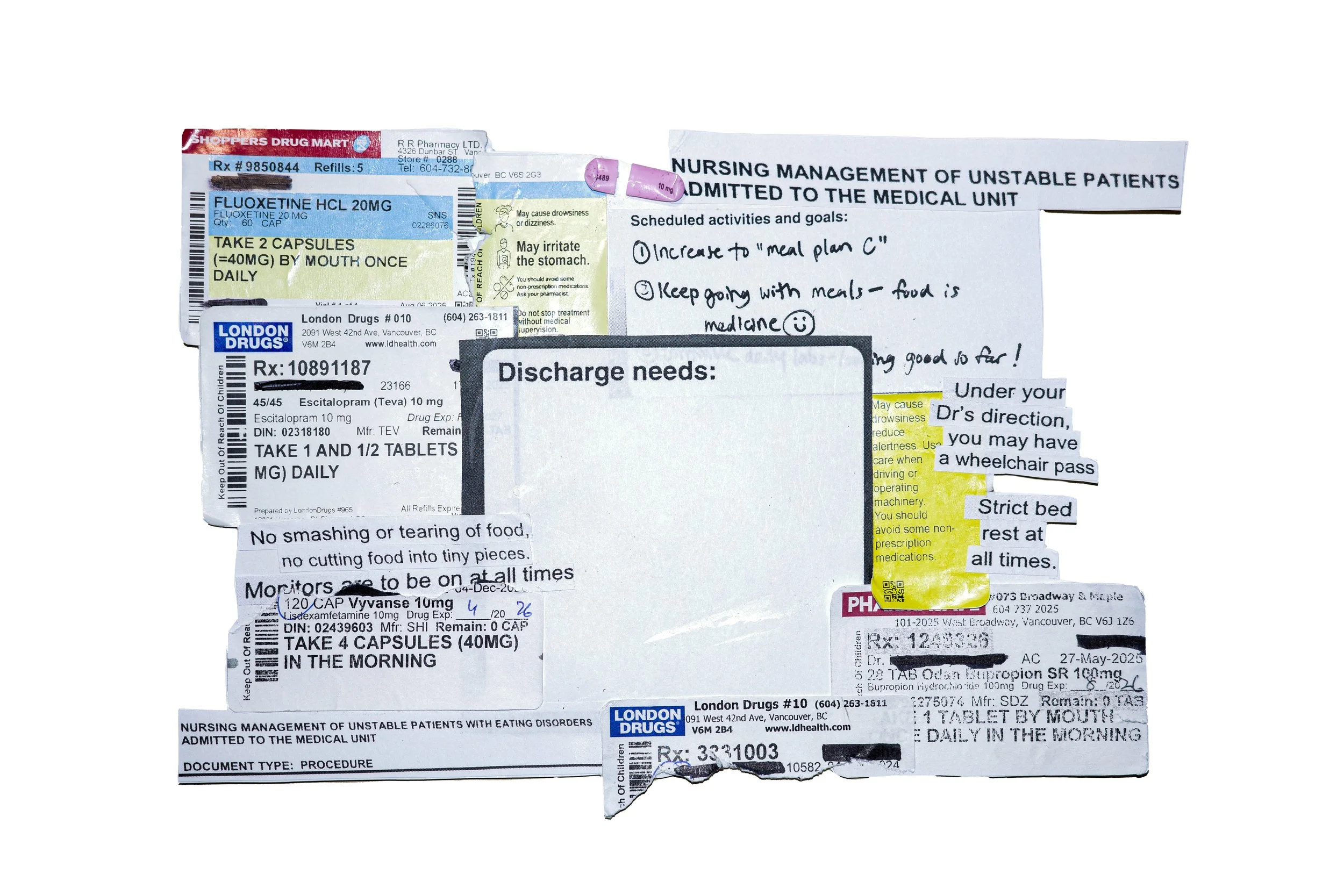
Messages from patients and translators on approaching mental health translation with cultural sensitivity and emotional resonance.
Language of the Heart:
Exhibited at the Roundhouse Community Arts and Recreation Centre in September 2025. A cultural installation.
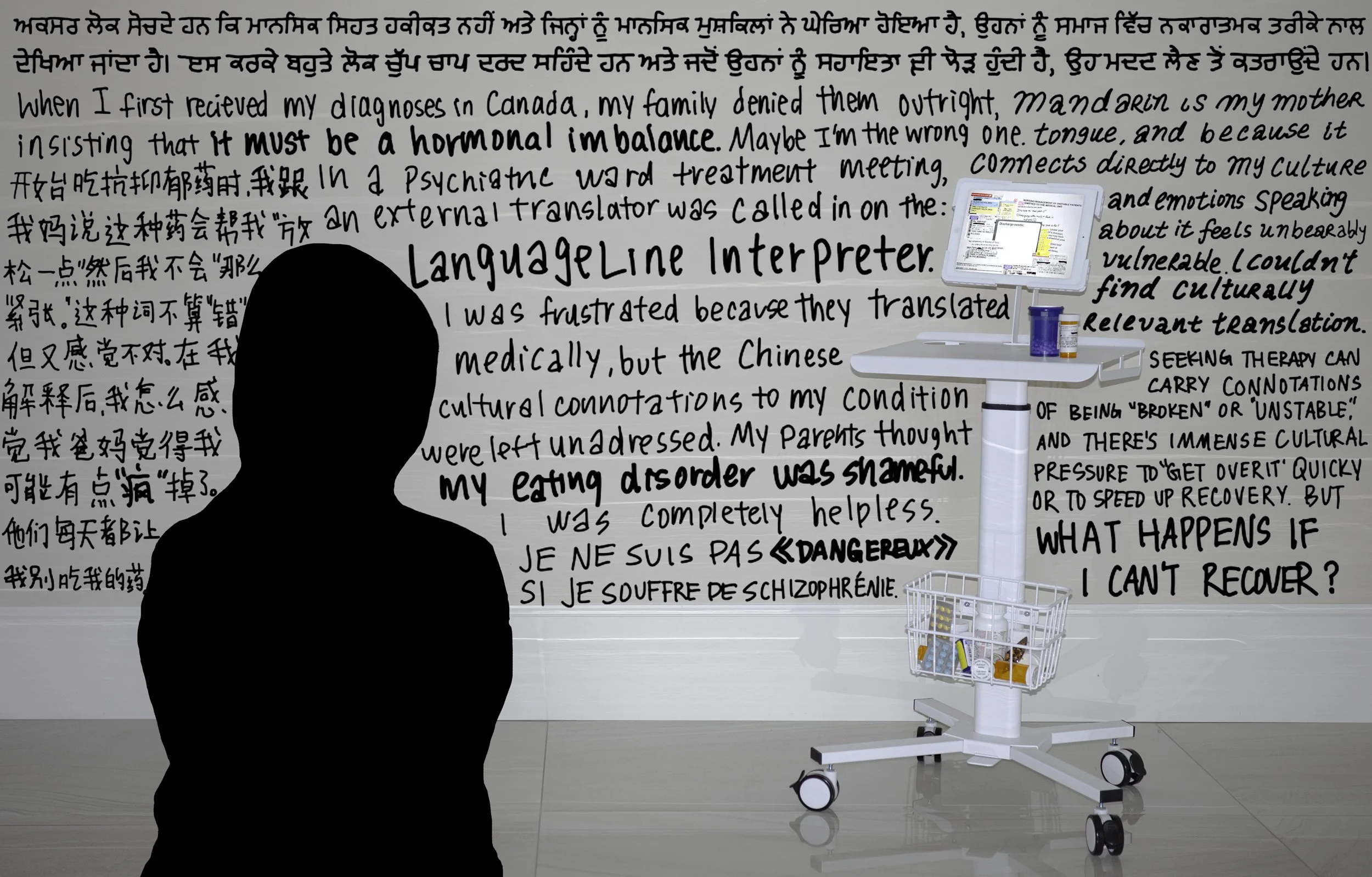
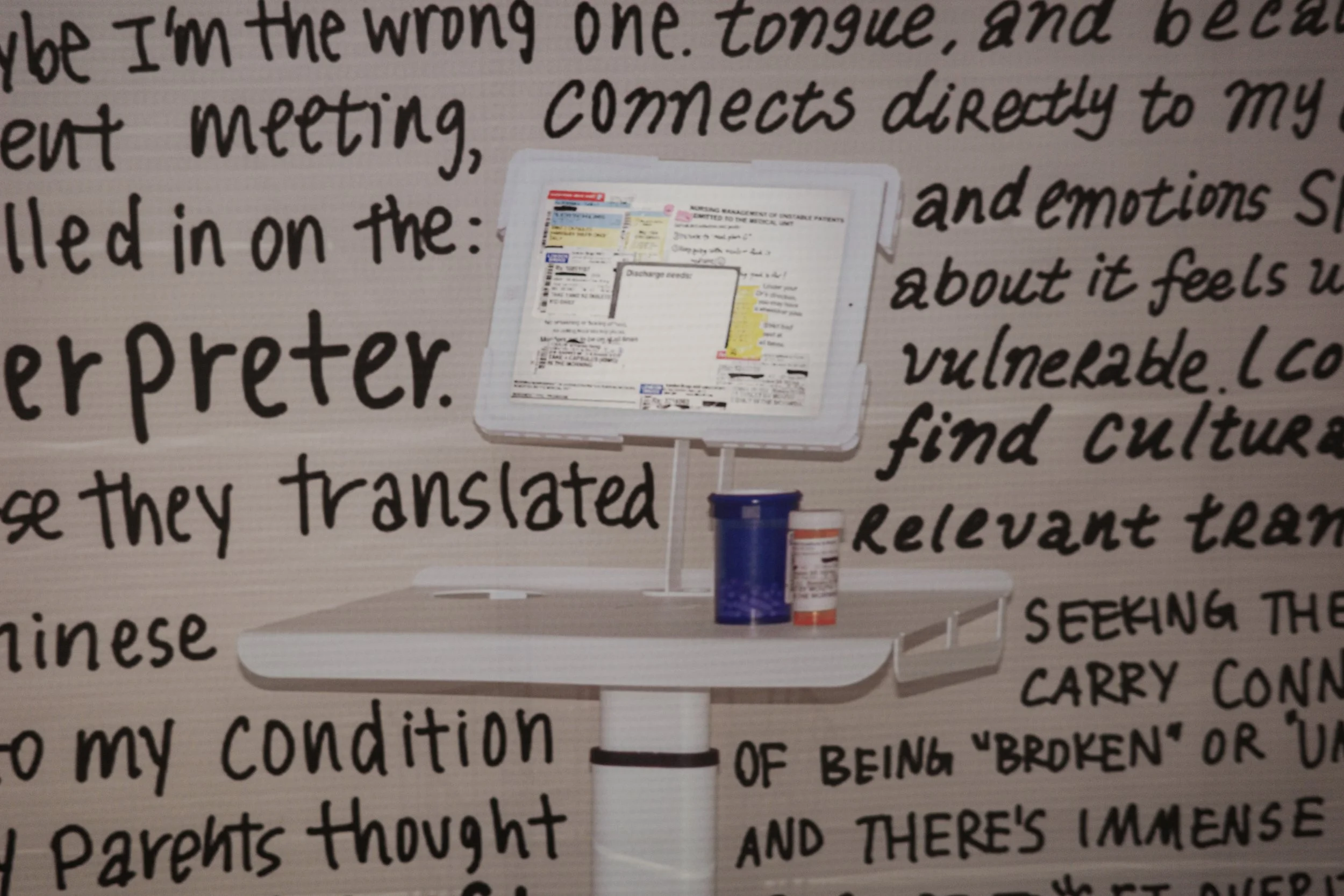
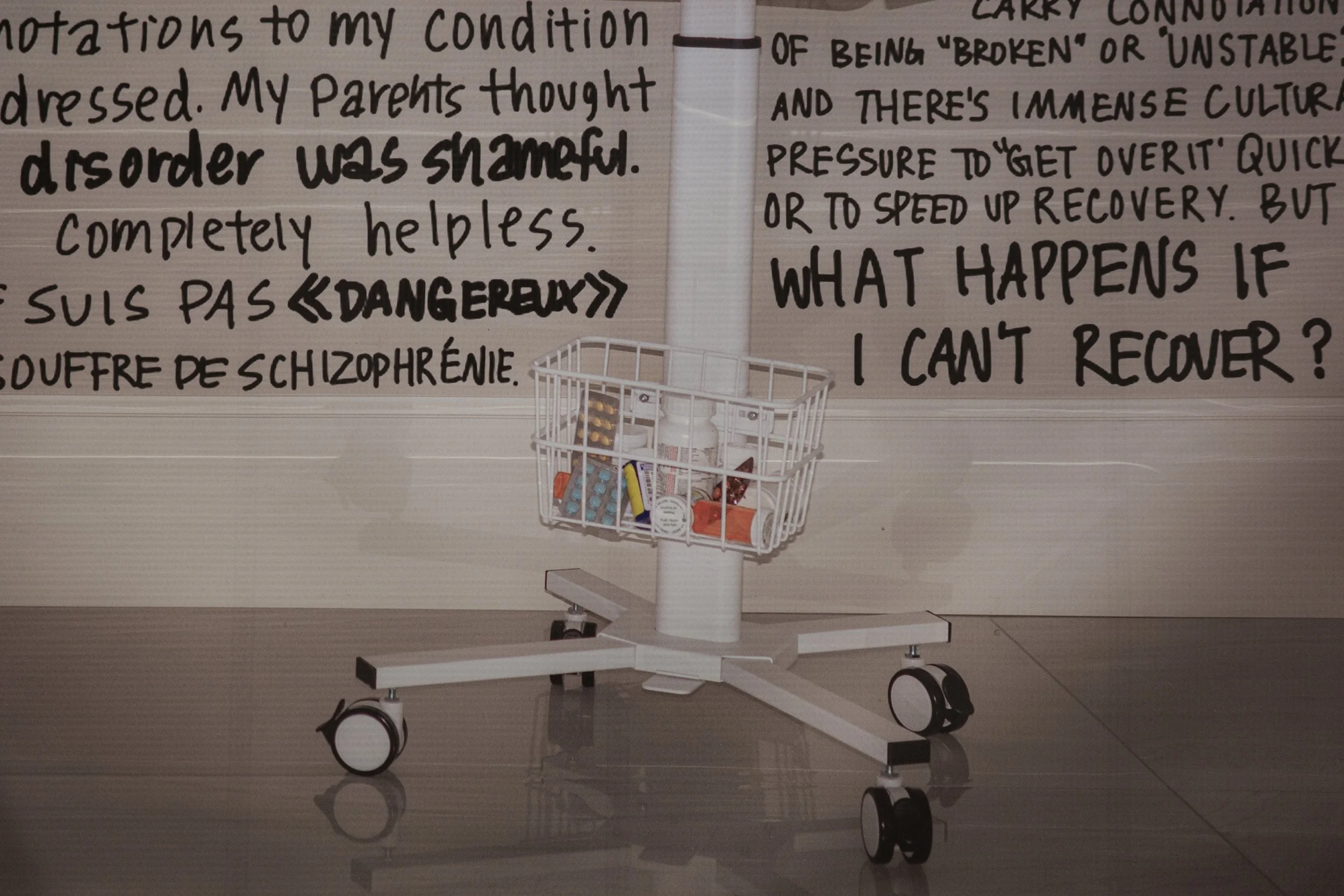
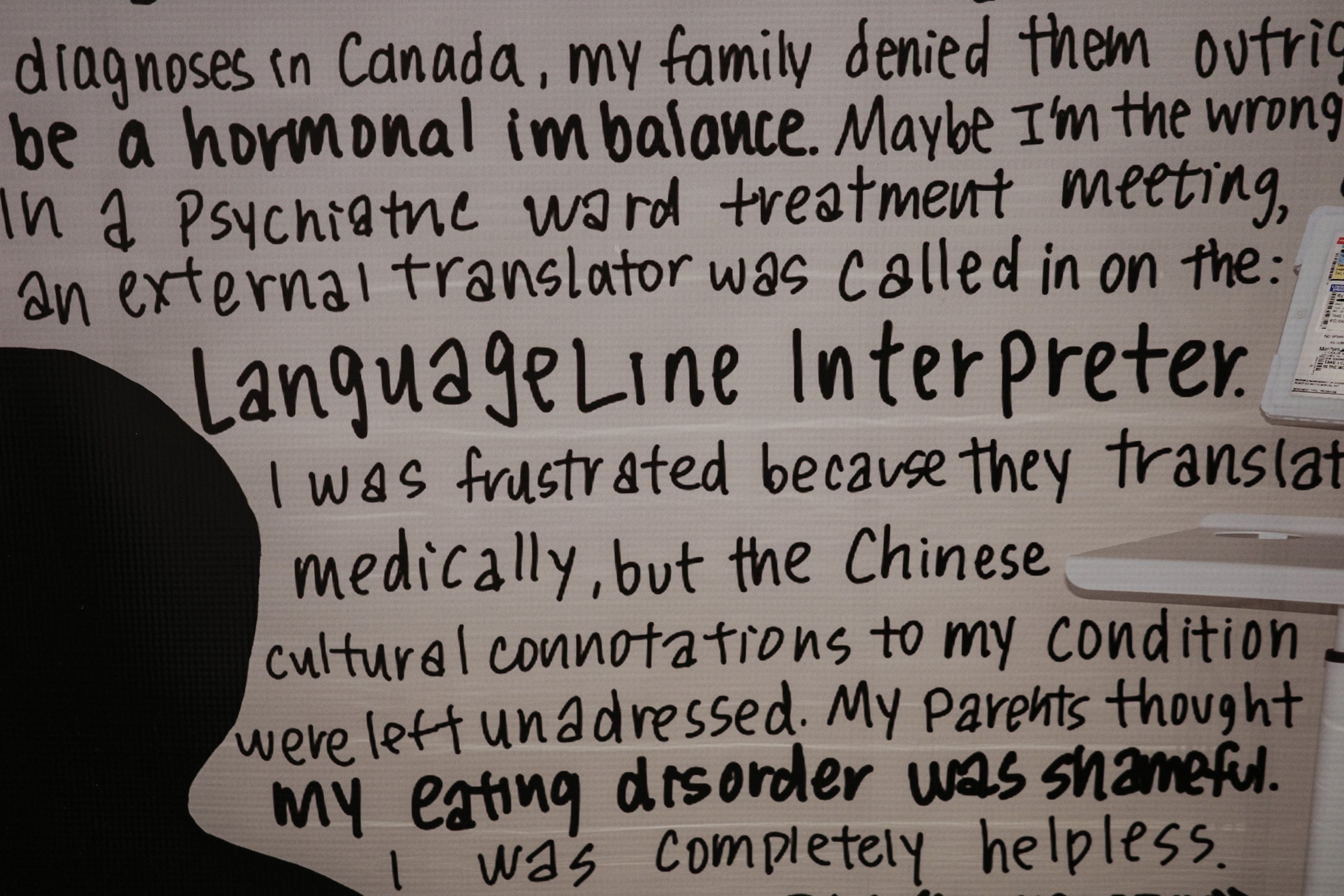
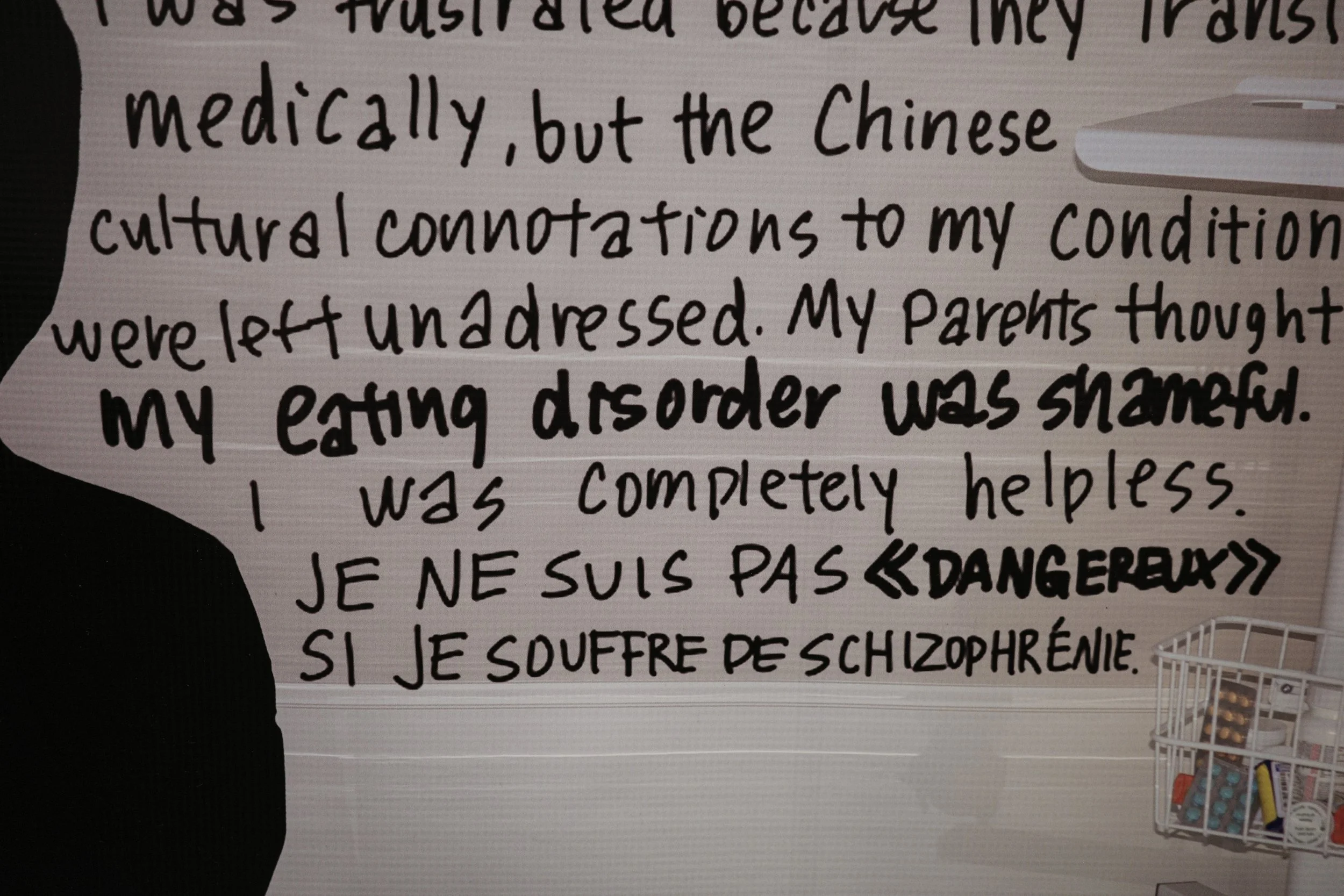
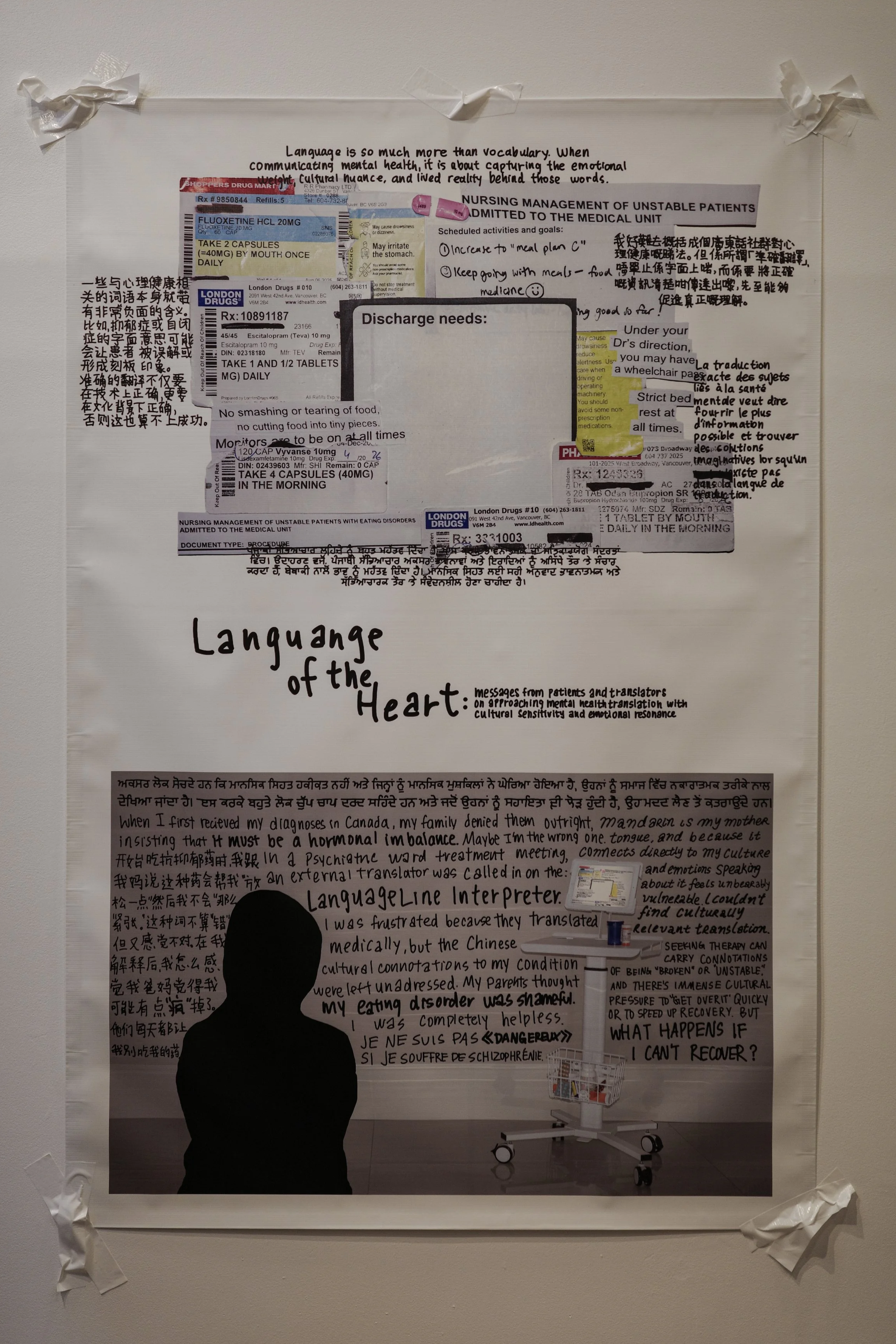
The LanguageLine Interpreter on Wheels is a machine that provides interpretation services, usually in medical settings, to patients who experience language barriers. I hope you’ve never heard of it. I learned about it through my best friend, who was hospitalized for an eating disorder.
As her family’s sole English speaker, she was forced to relive her pain when translating medical jargon with connotative precision, bridging a cultural gap her parents couldn’t navigate. When the LanguageLine Interpreter was rolled in, it spared her, but only halfway. She was no longer required to translate clinical terminology aloud, yet the machine could not carry the cultural and emotional weight each word bore; her pain was no longer spoken by her mouth, but it was still misunderstood.
Edward Bullough’s concept of Aesthetic Distance refers to the balance between emotional immersion and rational detachment when viewing art. Bullough described this concept as the difference between being lost in a fog at sea and stepping back far enough to see it as beautiful. However, I realized distance is a privilege. In moments of illness, cultural dismissal, and in the face of language barriers, we are not spectators of the fog, but sailors caught within. Individuals, like my friend, are sailing in a linguistic storm they never asked to captain.
During her recovery, we founded Fluent in Minds, a nonprofit organization dedicated to improving the accessibility of mental health information for non-native English speakers. Through translation, we sought to honour cultural nuance and emotional resonance, recognizing that accuracy alone does not guarantee understanding, and that language, when mishandled, can deepen isolation rather than relieve it.
This realization became the starting point of my work. I began collecting testimonies from patients, friends, and members of our translation team, tracing the space between medically accurate vocabulary and language that felt understood. From those stories, I discovered the LanguageLine Interpreter—its presence, its necessity, its silence. Yet, when I called hospital departments to photograph one, I was passed between clinics, managers, and foundations, met with confusion and refusal. So I sourced a replica online, built the machine myself, and staged a scene in my living room.
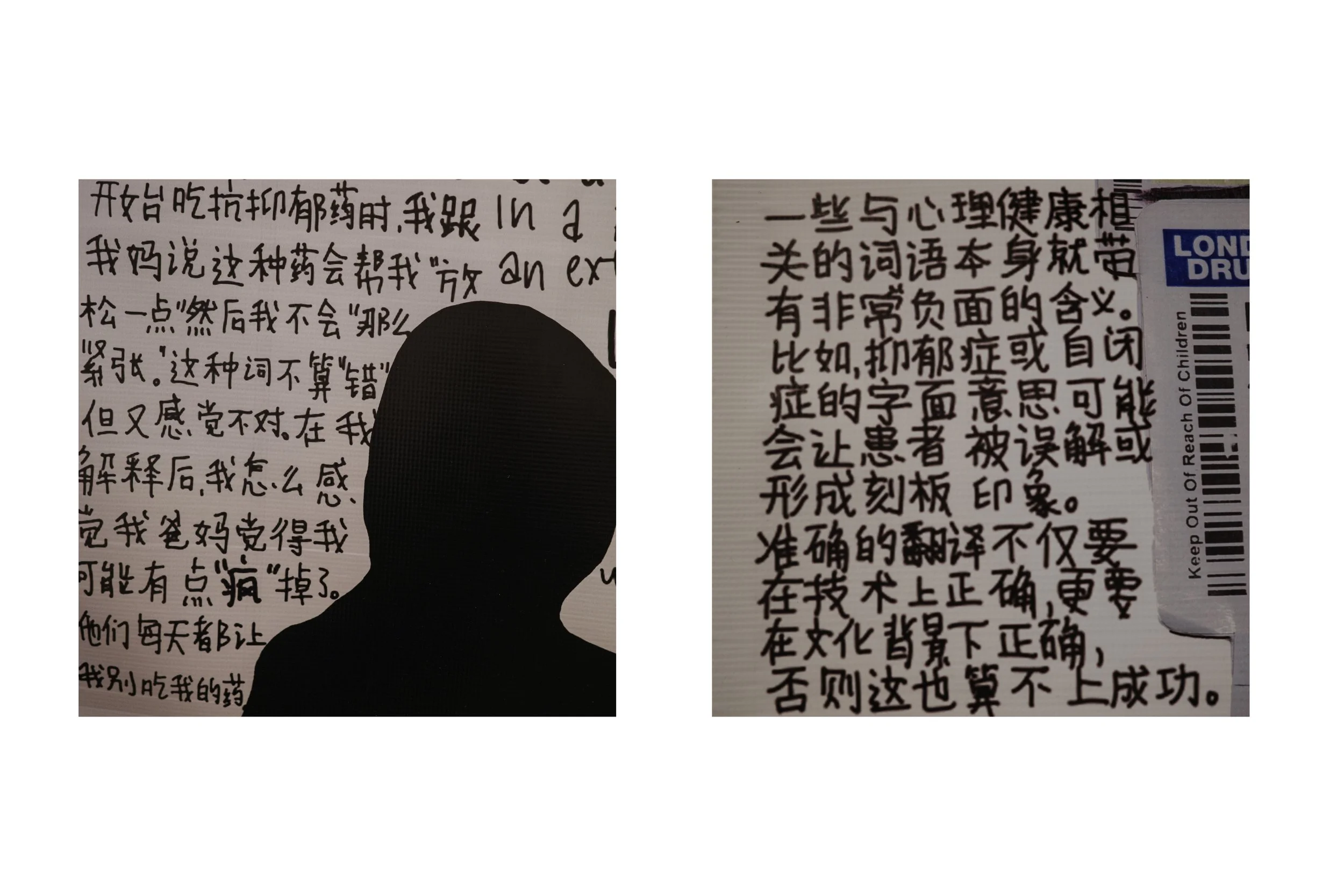
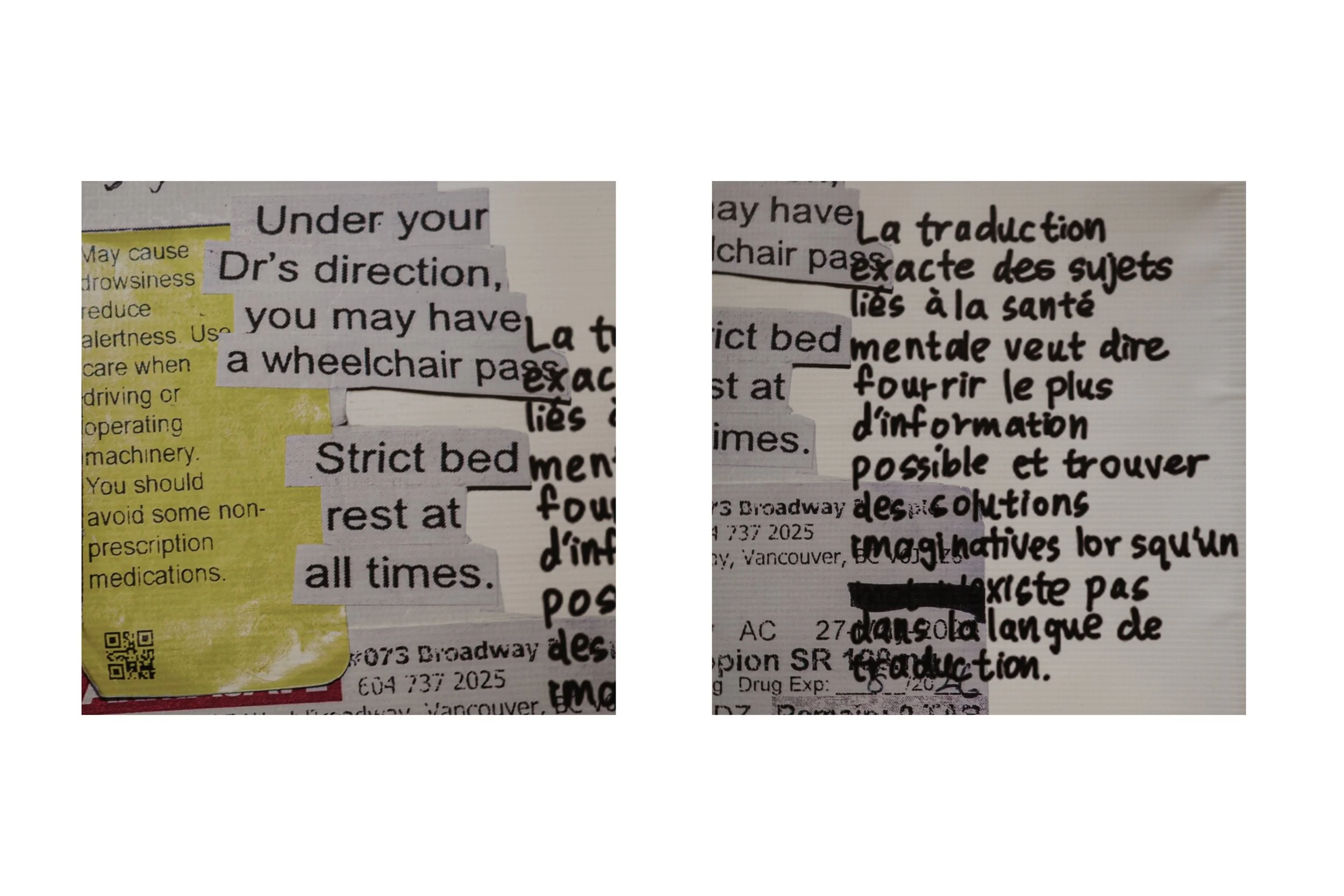
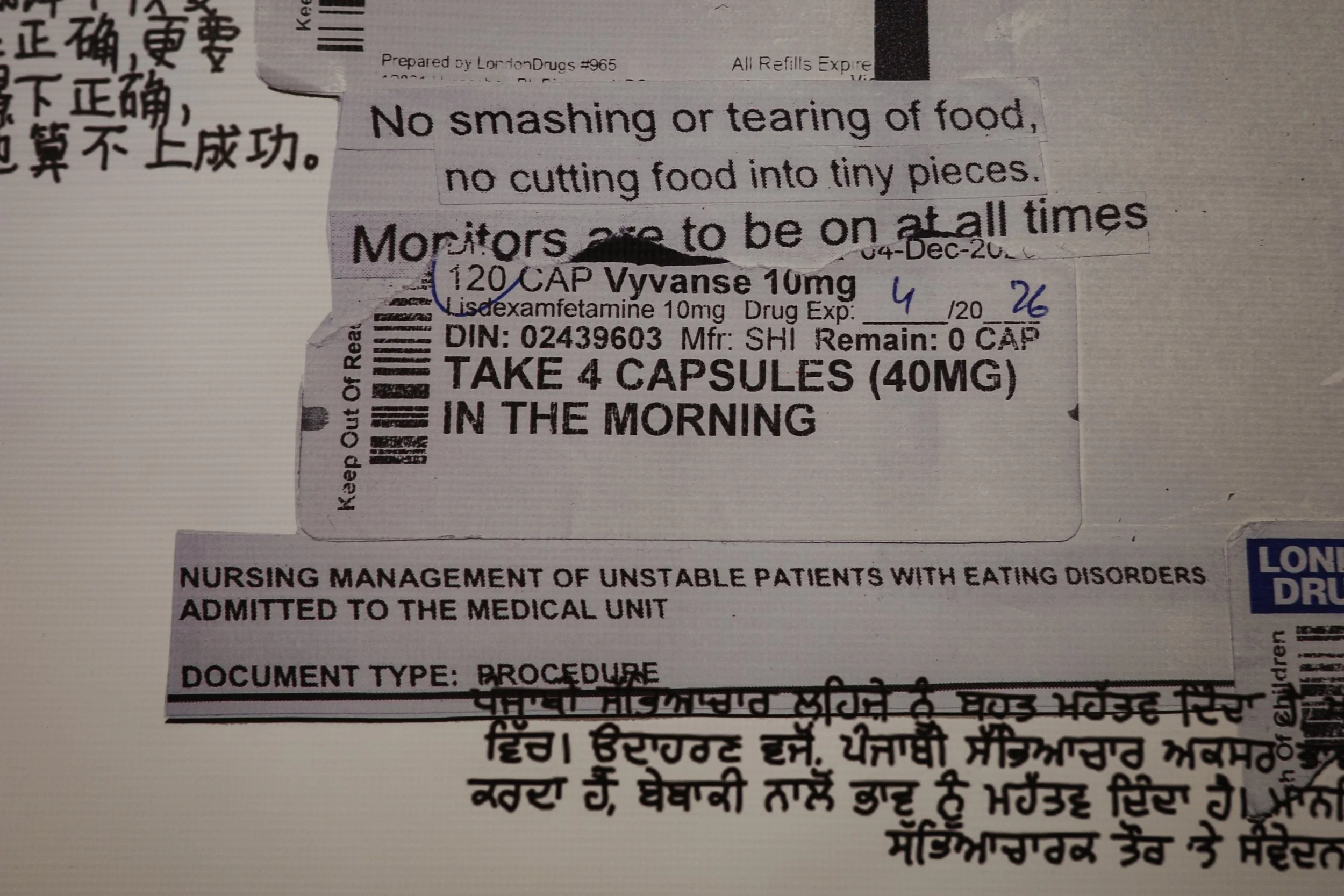
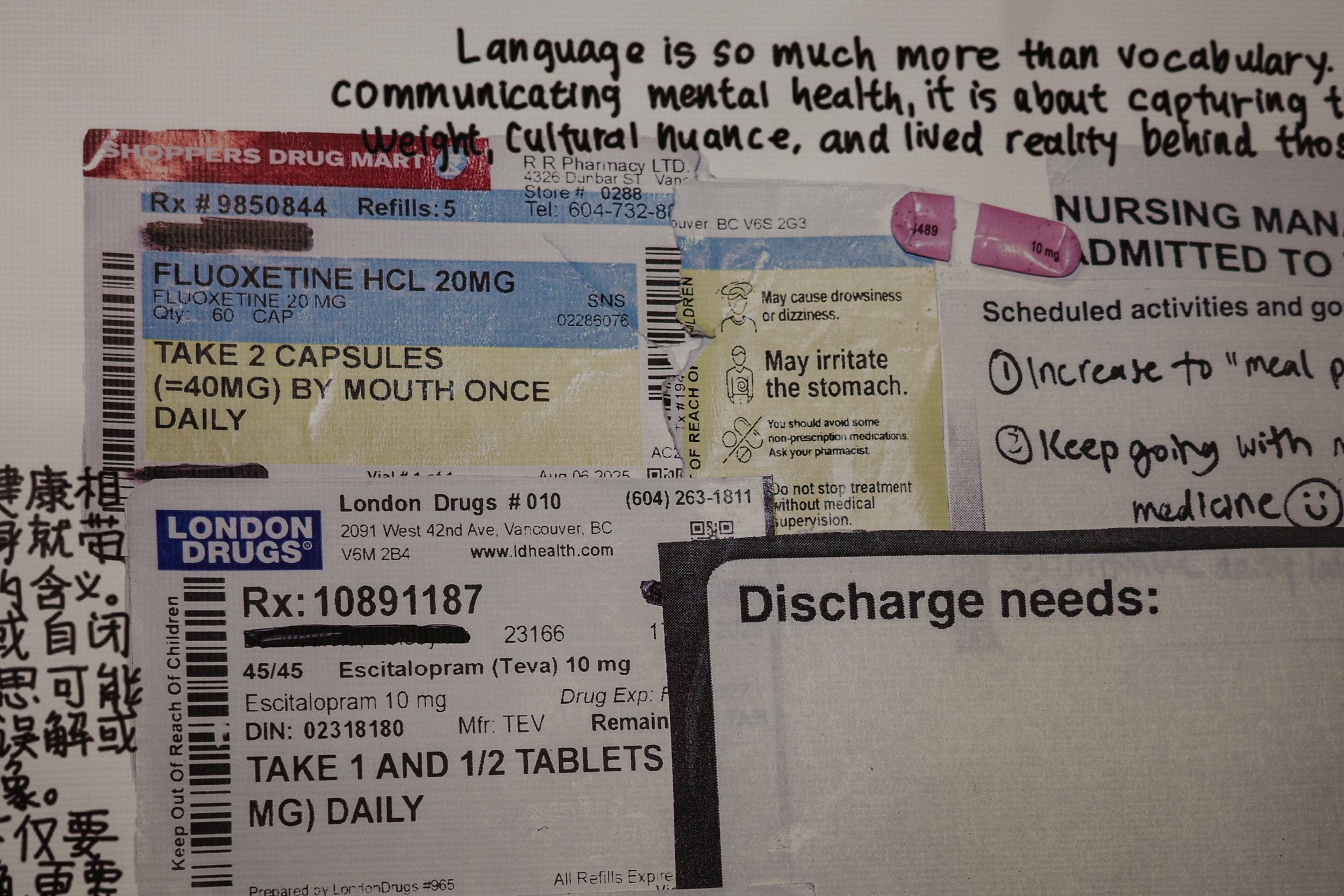
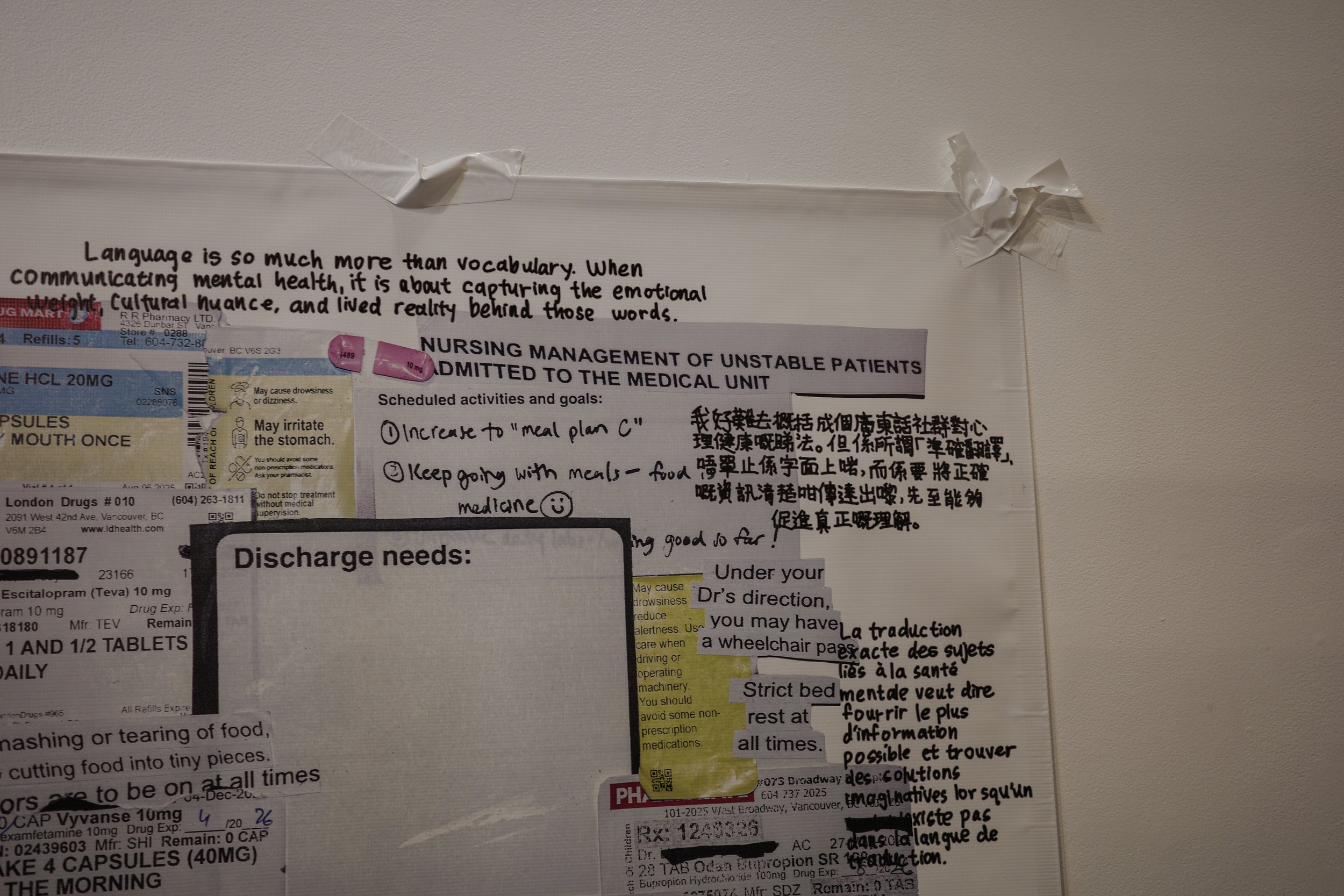
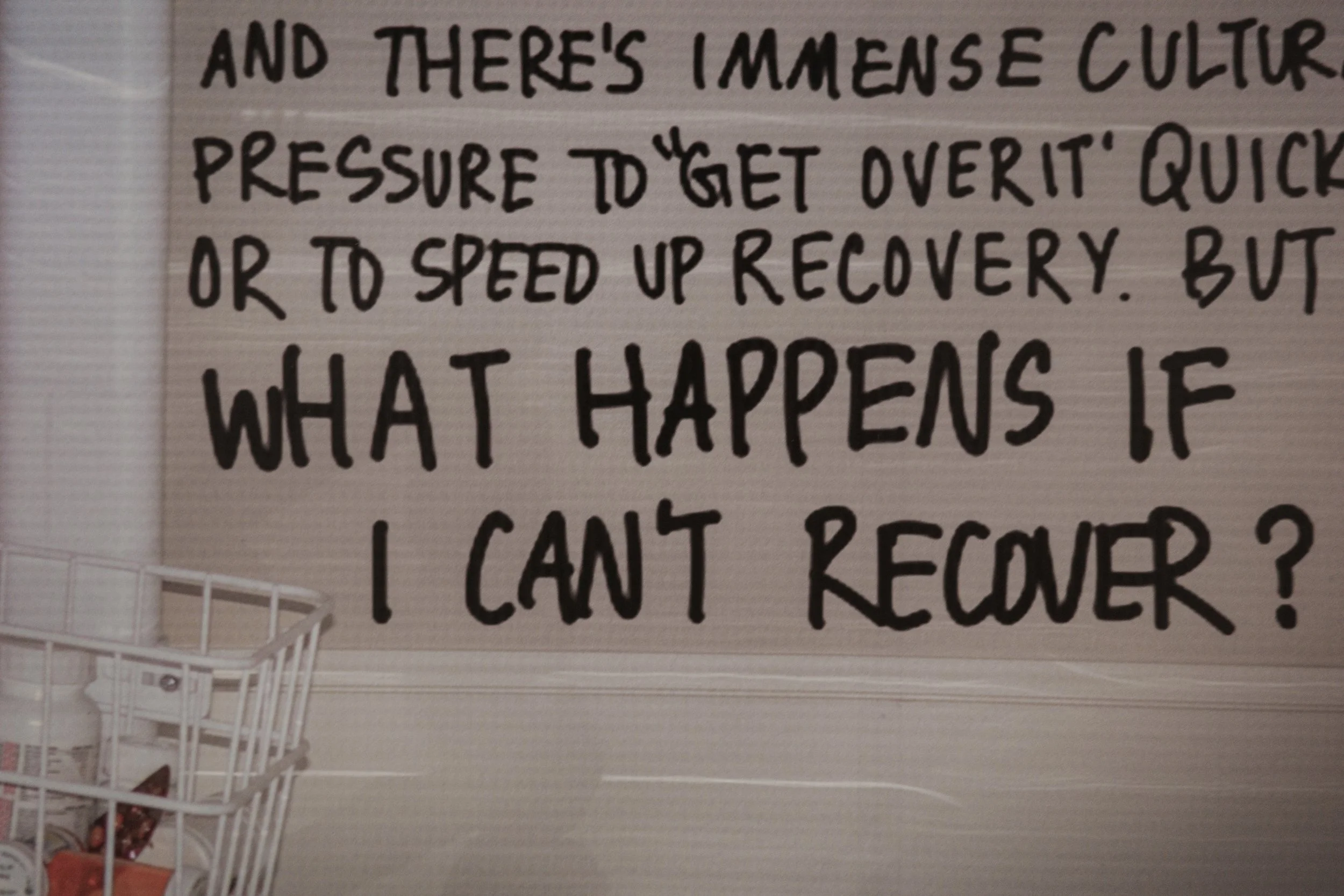
The piece unfolds in three parts: a replica of the LanguageLine Interpreter, standing in for the gap between translation and understanding; a collage of hospital documents, treatment plans, and medication records, echoing the sterile directions patients are asked to navigate; and messages from patients and translators across cultures, insisting on what is lost when meaning is reduced to jargon alone.
This multimedia photograph does not only translate; it feels, voices, and listens.
I hope you never have to need the LanguageLine Interpreter. But if you do, I hope there is someone to translate not only your words, but your heart. Until then, Fluent in Minds and I will continue to thin the fog and foster a community that is fluent in the universal language of compassion.
Testimonies and translations from:
Aeris Wren
Alina Xu
Beau Wong
Cohen Veysey
Eva Zhou
Harnoor Sandhu
Sissi Zhao
Languages include:
Cantonese
English
French
Mandarin
Punjabi
A special acknowledgement to:
Daphne Liu
Our audience, who took the time to read, experience, and share these urgent, important perspectives.
Finally, thank you to everyone who carried this journey forward, step by step, and further into the fog, and to Fluent in Minds, for walking it with me.